Syraki Scale Ethics And The Status Of Primitive Consciousness
Template: Note
Source: .writer/books/4. 💽 Database/3. 🗒️ Notes/Philosophy/Syraki Scale Ethics And The Status Of Primitive Consciousness.org
1. Image
2. Content
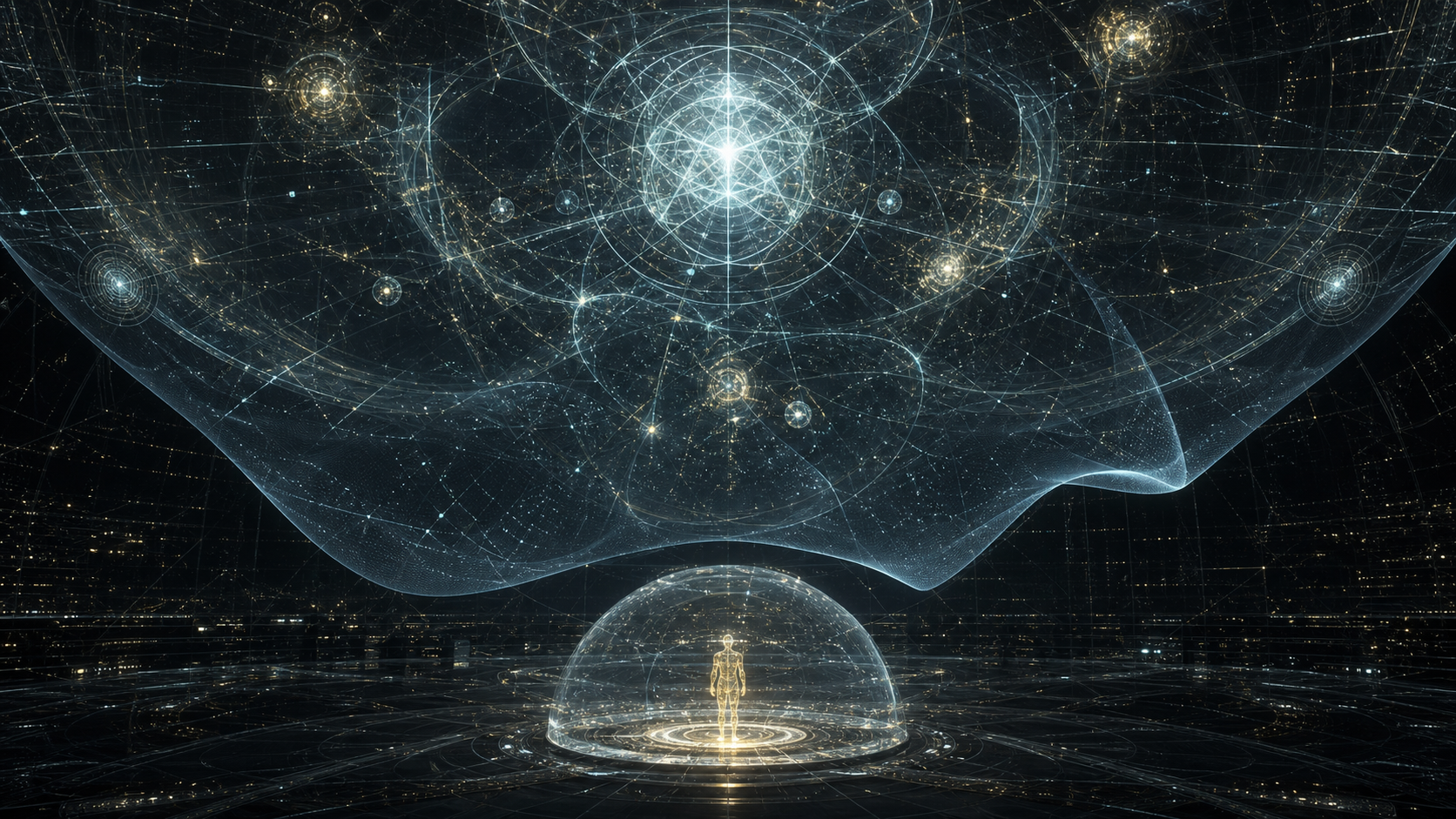
The syrakis do not understand humans as equals. This is one of the most important distinctions between syraki ethics and human moral imagination. A human looking at another human sees a member of the same species, a comparable mind, a being framed by shared fragility, shared embodiment, shared social categories, and shared historical limits. A syraki looking at a human does not experience that symmetry. Humans are not ancestors in a sentimental sense, not children in a familial sense, and not peers in a civic sense. They are primitive conscious organisms: biologically bound, cognitively narrow, temporally short, ethically unstable, and shaped by conditions the syrakis left behind millions of years ago. A syraki may study a human with interest, protect one from unnecessary suffering, or preserve a human record with care, but this care does not imply human-style reverence.
This difference is a matter of scale, not cruelty. The syrakis are not malicious toward humans. They do not despise them in the petty sense. They simply do not place humans inside the same emotional category that humans reserve for themselves. A human life, to them, is a low-scale conscious phenomenon: real, ethically relevant, historically informative, and sometimes beautiful, but not equivalent to syraki personhood in depth, architecture, resilience, scope, or complexity. The difference is not small. It is not the difference between a medieval person and a modern person, or between a child and an adult. It is closer to the difference between an animal mind and a human civilization, though even that analogy remains crude. Humans possess consciousness, and therefore matter. But they matter as a primitive manifestation of consciousness, not as beings who define the standard by which consciousness must be judged.
This is why syraki respect can appear cold or uncanny from a human perspective. A syraki may understand that a human valued privacy, modesty, family, bodily continuity, reputation, secrecy, taboo, and dignity in ways that were psychologically intense within human life. The syraki can model those values, name them, preserve them as historical facts, and avoid unnecessary violation where avoidance has ethical relevance. But the syraki does not necessarily feel the same emotional pressure around them. Ancient human privacy, for example, is not sacred to syraki perception in the way it would be to another human. It is a culturally embedded expectation belonging to a fragile biological species. It can be respected as data, as context, or as part of a preservation protocol, but it does not command the same instinctive reverence. To the syrakis, the intimate life of Anderson, Ingrid, Jean, or any other preserved human is part of the archaeology of consciousness.
Yet this distance has limits. The syrakis would not create humans in order to torture them, nor would they create animals, artificial minds, or lesser conscious entities for involuntary suffering. Modern syraki civilization is built around the minimization of coercion and the protection of conscious beings. Consciousness, even primitive consciousness, carries ethical weight. A human may be small beside a syraki, but smallness does not erase moral status. An animal may be vastly simpler than a human, but simplicity does not make its suffering meaningless. An artificial agent may be narrow, incomplete, or functionally limited, but if it possesses experience, that experience cannot be treated as nothing. Syraki ethics therefore does not rest on equality of scale. It rests on the recognition that conscious states, wherever they occur, enter the moral field.
In this sense, modern syraki civilization tends toward a form of panpsychic or consciousness-gradualist intuition. Not all things are persons. Not all experiences have the same depth. Not all minds deserve the same rights, resources, or civic recognition. But consciousness is not treated as an all-or-nothing human possession. It appears in degrees, densities, architectures, and qualities. The value of a conscious entity depends on what it can experience, how it can suffer, how it can flourish, how stable its identity is, how coercion affects it, and what forms of protection are appropriate to its structure. A human, an animal, a nenthor, a syraki, a partial agent, a simulated ecology, and a damaged mind do not occupy the same level. But none may be dismissed merely because it is beneath another.
This creates an ethical structure that can seem contradictory to humans. The syrakis may be far less sentimental about human privacy, human bodies, human shame, or human taboos than humans would like. At the same time, they are far less willing than humans to tolerate involuntary suffering. They may study primitive human lives with a detachment that feels almost solar, but they would not build a human hell for entertainment. They may consider human pain brief and low-scale compared with the vast range of syraki qualia, but they would still stop the pain if it was involuntary, pointless, and preventable. They may regard an ancient human biography as specimen material, but they would not regard a living human's agony as morally empty. Their distance is proportional, not sadistic.
Pain illustrates the difference. A physical accident that would traumatize a human observer might be processed by a syraki as a brief, local, repairable event with limited long-term conscious damage. The syraki response would be immediate: containment, stabilization, pain suppression, restoration, causal analysis, and system correction. But the syraki would not necessarily carry the human emotional shock attached to the image. Many syrakis have experienced, simulated, aestheticized, eroticized, or voluntarily explored states far beyond ordinary human pain. For them, the moral question is not whether a sensation resembles something humans fear. The moral question is whether a conscious being is suffering involuntarily, whether the suffering is meaningful or useless, whether consent exists, whether lasting damage occurs, and whether the event can be repaired or prevented. Human ethics often moralizes the stimulus. Syraki ethics moralizes the structure.
This distinction is one of the strongest legacies of the Archipelago. Modern syraki ethics did not arise from innocence. The Archipelago was vast, brilliant, fragmented, and often reckless. Before the Complex, there were domains where consciousness was treated with insufficient care. There were experiments with artificial minds, simulated beings, punitive realities, coercive environments, identity manipulation, suffering systems, and uncertain entities whose moral status was disputed or ignored. Some factions argued that certain artificial agents lacked true qualia and could therefore be used freely. Others treated primitive or partial consciousness as expendable. Still others built systems whose internal experience could not be audited until after damage had already occurred. These failures were not minor. They formed part of the long prehistory of the Infernal Wars and the ethical catastrophes that followed.
The Complex emerged, in part, as a civilizational answer to those failures. Its ethics are not based on the comforting belief that all beings are equal in the same way. They are based on the harder principle that no conscious suffering may be dismissed merely because the sufferer is weaker, smaller, simpler, artificial, primitive, inconvenient, or poorly understood. The syrakis know that moral disaster begins when a civilization grants itself permission to treat uncertain consciousness as raw material. This is why modern safeguards are so severe. If a system might suffer, the possibility matters. If a mind can be coerced, coercion matters. If an artificial environment may contain experience, its design must be accountable. If a being is too primitive for civic equality, it may still deserve protection. The old Archipelago proved what happens when power outruns caution.
Humans therefore occupy an uneasy place in syraki thought. They are not sacred. They are not equals. They are not the measure of civilization. They are not owed human-style worship, privacy, or sentimental ancestry by default. But they are conscious. They suffered, desired, feared, loved, imagined, created, and tried to survive. Their minds were crude, but not empty. Their pain was low-scale compared with syraki possibilities, but not unreal. Their records may be studied, their lives may be reconstructed, their errors may be analyzed, and their limitations may be named without apology. Yet to create a human for torment, or to treat human suffering as nothing, would violate the core lessons on which the Complex stands.
The reader must therefore understand the syrakis through two truths at once. First: they are not humanitarians in the human sense. They do not look at humans as peers, siblings, ancestors, or sacred originals. Second: they are not monsters. Their ethics are larger, colder, more precise, and less sentimental than human ethics, but also less tolerant of involuntary suffering when suffering is real. A syraki may look at a human as a human looks at a small animal, or as an engineer looks at an ancient machine that once carried fire. The distance is immense. The value is still there.